
The High-Performance Paradox: What the Olympics Reveal About Greatness and Its Shadow
Why ambition creates both excellence and self-doubt, and how presence transforms the paradox
Excellence is magnetic. But it carries a shadow.
We’re drawn to excellence because it looks powerful. It’s rare, and it’s clean. We celebrate it and build identities around it. We strive for it. And from the outside looking in, we tend to see only two outcomes: glory or failure.
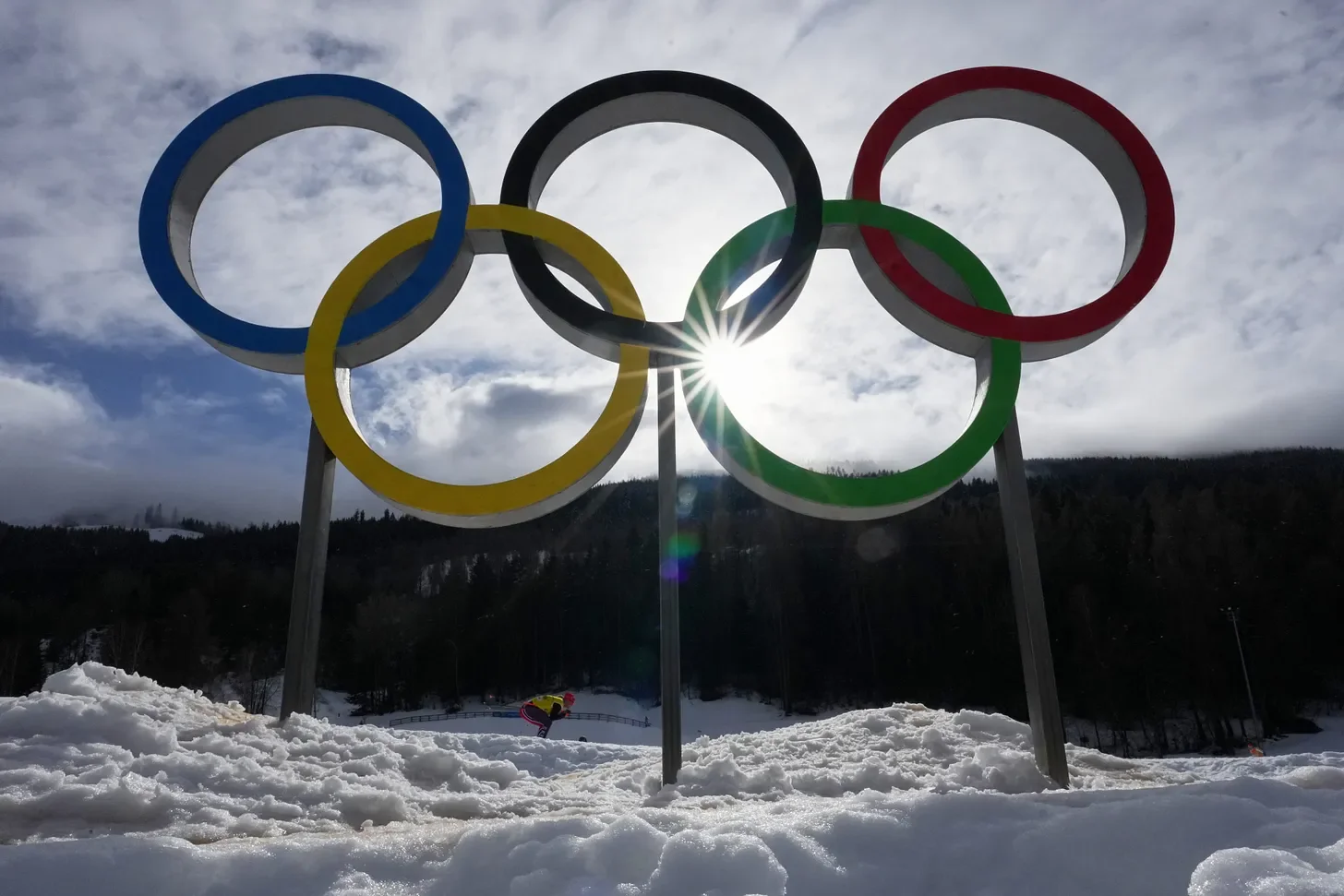
(Kirsty Wigglesworth/AP)
This perspective creates a binary view of excellence.
Within sports circles, especially in figure skating, the language is, in fact, either/or: if you don’t win, you lose. There is little room in that framework for nuance, integration, or growth. You are either on top of the podium or you are not.
But that binary framing misses something essential.
The Shadow Built Into Ambition
High performance has a shadow. The High-Performance Paradox is this: the same ambition that fuels excellence also generates an internal underbelly we rarely examine. It is produced by the very drive that elevates us, and if it remains unintegrated, the force that lifts us can begin to turn inward, activating painful patterns like perfectionism, self-doubt, comparison, anxiety, people-pleasing, and a quiet sense of never-enoughness.
The paradox isn’t that excellence has a shadow. It’s that the same force produces both greatness and breakdown.
When the Stakes Reveal What’s Beneath
Recently, watching U.S. men’s figure skater Ilia Malinin at the Olympics in Milan, I saw that paradox unfold in real time.
I say this not just as a spectator, but as a former figure skater and coach with over 25 years of experience, and as a performance psychology coach to Olympic and professional athletes, as well as founders and senior leaders. Decades in Silicon Valley have further shaped my understanding of high performance and its complexity.
I know what presence looks like and what pressure feels like. When the mind is busy with self-talk or worry, it’s harder for the body to be free in performance.
Malinin has dominated figure skating since 2023. When he skates well, the “Quad God,” capable of landing quadruple jumps once deemed physically impossible, appears fearless, almost untouchable, as if gravity had loosened its grip.
But in the long program, at his first Olympic Games, something shifted.
As he took the ice, to a roar that nearly shook the arena, his shoulders looked softer, less confident. His young face was tighter than usual, the look of a mind running ahead of the body; his physicality foreshadowed his challenging performance.
He wanted history: all 7 quads on Olympic ice. And when the stakes are that high, the dark side of drive can surface. Not because the athlete is weak, but because the ambition is enormous.
He “popped” his opening jump, the quadruple axel, the defining element that would ensure him a place in Winter Olympic history. From that point on, he seemed unable to reset, making a series of uncharacteristic errors. Many things could have been going through his mind, and though it’s not ours to know, what we witnessed shocked our systems. We think we wanted this for him, but at some level, we really wanted it for ourselves.
The Voice Beneath the Performance
The internal voice that often rises in those high-stakes moments with out-sized expectations can sound something like this:
Don’t mess this up.
You have to prove yourself.
What if…?
And here’s the deeper irony: that same critical inner voice is often echoed by the world afterward.
Shock. Criticism. Dismissal.
External judgment mirrors internal pressure. That’s the paradox in action.
But this isn’t a story about failure, it’s a story about integration.
Grace After the Scores
After the scores were announced, Ilia congratulated the medalists with grace. He showed composure, sportsmanship, and presence. That tells me far more about his trajectory than a single skating performance ever could.
The Way Through: Extreme Presence™
Because the way through the High-Performance Paradox isn’t with less ambition, or giving up, or ignoring what lurks inside, it’s claiming a deeper presence.
Extreme Presence™ is the ability to remain fully embodied and focused under pressure, where you recognize the shadow: the perfectionism, the fear, the identity wrapped around achievement, and you, rather than fracturing, remain steady and present.
It’s an intentional flow state.
When we fight ourselves inside, performance fragments. When we integrate the shadow rather than denying it, performance stabilizes. When we stay present, performance flows.
The paradox is not something to eliminate. It is something to integrate.
Not by suppressing the dark side. Not by pretending it isn’t there, but by facing it and integrating it. Training presence so excellence and wholeness can coexist.
Beyond the Ice
This isn’t just about Olympic skating; it applies to any one of us humans striving to accomplish something meaningful.
So, where in your life does the drive to excel quietly turn into self-criticism? Where are you performing instead of being?
High performance doesn’t have to cost you yourself. It can bring you back to yourself, from which true fulfillment springs, giving life to magical moments, the kind we were hoping to share with Ilia.
There is learning and integration for all of us in this instance:
When excellence and wholeness coexist, the ice feels different. The stage feels different. Leadership feels different.
Life becomes different, by design.
Not because the stakes are lower, but because you are fully there.
And that is where sustainable greatness lives.
This reflection is part of a broader exploration of the High-Performance Paradox - how excellence and its shadow reveal themselves across sport, culture, and leadership.
If this story resonated, it’s because presence isn’t a luxury for leaders — it’s a way of living, leading, and creating at your highest level.
My work with founders and leaders often runs deep, helping them redesign their leadership approach from within. If you’re exploring that path, send me a note. I’d love to hear what you’re building.
Meantime, discover a new way to think about optimal performance, one rooted in clarity, not pressure. You might enjoy this sample from my audiobook, LEAP, where you will learn more about how high achievers create sustainable success by leading from within.