
Olympic Women Reset and Rise: Redefining Human Performance
A Different Response to Pressure
We have witnessed a new era in figure skating.
Women supporting women. Women competing at the highest level in the world while still believing in the highest good for all.
Watching the recent women’s Olympic figure skating event, something felt different. The US competitors demonstrated authenticity, resilience, and humanity - all while in the spotlight.
The technical difficulty was extraordinary, as always. The stakes were immense, the pressure undeniable.
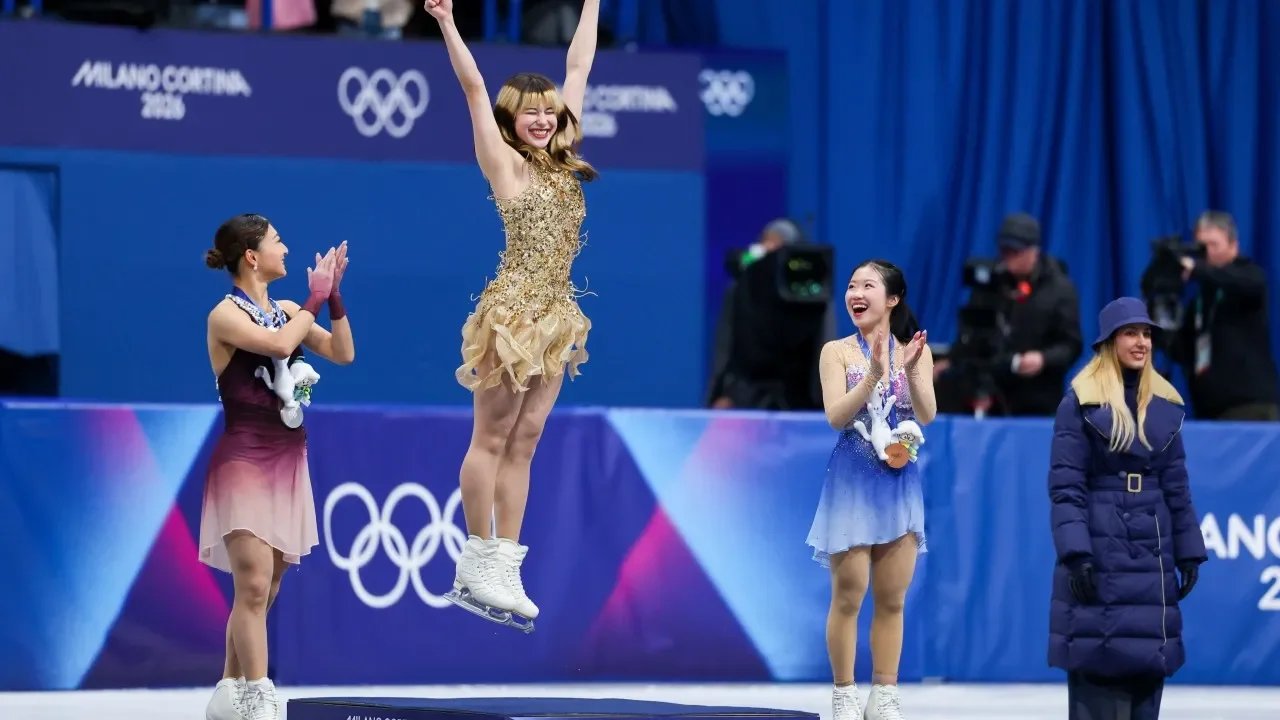
(Photo by Jiang Qiming/China News Service/VCG via AP)
What changed was not the difficulty, but their response to the pressure.
For decades, elite performance, especially in women’s skating, meant bracing against external pressure from many sources: judges, rivals, expectations, and public scrutiny, for example. The sport has a history of intensity where camaraderie in practice could turn ferocious once competition began.
Psychological games. Sabotage.
Grown from a culture that suggested there was room for only one success story.
Without internal resilience, that kind of environment could break an athlete or leave her exhausted and unfulfilled - even in victory. Having competed in that era, I can say the shift is unmistakable.
In fact, it feels recent, even compared to the last Olympic cycle.
Alysa Liu: Reset as Reclamation
Take Alysa Liu.
At 13, she won U.S. Nationals with all seven triples amidst enormous expectations. If you revisit those early performances, you can see the strain on her face. A few years later, that intense pressure followed her to the Beijing Olympics held in her father’s home country.
That is the traditional arc: rise under pressure, take on the weight of responsibility, and just push harder.
Ignore what’s happening inside.
Instead of submitting to the inevitable, she retired at 16.
Sixteen.
She didn’t buckle up to face the pressure.
Instead, she stepped away from skating altogether. For two years.
She did typical teenage things, spent time with friends, got to know herself outside the rink, and allowed the human in her to emerge.
Then, on a ski trip with friends, she rediscovered the feeling of flying, the sensation that had made her fall in love with skating in the first place.
Little did she know the pause would lead her to reclaim that love.
She returned to skating but on her own terms: her music, her costumes, her needs. She reframed her relationship to the sport itself; she chose personal power over being driven by stress.
She chose joy over anxiety.
She reset and rose.
Her Olympic long program was free, joyful, and technically elegant. After winning gold, when a reporter asked what she would do next, she paused, almost puzzled, and said, “I don’t know. I’m just present right now.”
That sentence says everything.
Presence does not mean you don’t care about the medal; anyone who has competed knows you care deeply. But presence stabilizes your ambition. It anchors you in the process rather than the outcome.
And when self-esteem rises from effort rather than results, something shifts. You can perform as a freer, clearer, and stronger human - as your truest self.
You work with the pressure instead of against it.
Amber Glenn: Strength Built in the Reset
Then there is Amber Glenn.
At one point in her career, she recognized that her self-talk was undermining her performance; the stress was creating unmanageable inconsistency. Internally, something needed to change.
So she also paused.
She looked inside and did the work to reset.
In the short program in Milan, she doubled a jump meant to be a triple. At the end, before acknowledging the audience, she held her thumb and index finger close together and mouthed, “So close.” That is skating: a sport of millimeters, fractions, and edges, where the smallest error can shift placement dramatically.
It would have been easy to spiral, to grip harder and brace herself for what was to come.
Instead, before the long program, she reset again. She seemed to lean into the psychological strength she built during her absence, and her long program was mesmerizing: clean, powerful, precise. Joy was visible - not only in freedom, but in discipline.
That is resilience.
Rise after reset.
Over decades in performance psychology, I have learned this: the more you embrace the reset as growth rather than failure, the less extreme your ups and downs become. The lows do not go as low. The highs rise higher. You detach not from caring, but from hyper-focusing on outcomes.
The ability to reset becomes an essential part of your career rhythm.
Rising into shared humanity
And then, with 18-year-old American Isabeau Levito in the mix, elegant, composed, and quietly powerful, something larger was visible.
The three American women were dubbed the “Blade Angels,” and as former Olympic Champion Kristi Yamaguchi observed, they nearly finished each other’s sentences. But what struck me most was their energy with other skaters.
Amber shielding a crying competitor from intrusive cameras.
Alysa leaping with joy for a medalist from China.
Isabeau sharing relentless positivity.
High fives. Hugs. Visible support.
I have never seen that at this level.
And here is the paradox: the support did not dilute the competition. Rather, it elevated it.
Because once you stop hardening against external pressure, you no longer need to harden against each other. There is room for everyone.
Internal clarity rises above high-stakes pressure.
The performative becomes human.
Beyond the Rink
I’ve always believed sport is a mirror for life. If you watch closely enough, it tells us how humans break down, break through, and come back stronger.
What these women showed us is that the strongest performances did not come from resisting pressure or pretending it isn’t there. They came from learning to face it, through reset, reframing, and presence.
This is not just a story about figure skating, or even sport in general.
It is also relevant to performance in leadership and business. It applies to any arena where the stakes are high and the margins are thin.
What if the next evolution of high performance involves not bracing against external pressure, but integrating and rising above it?
What if the reset you are resisting is the doorway to your next level of growth?
The future of excellence may not belong to the most hardened among us.
It may belong to those who can compete fiercely, recover honestly, and remain fully human in the process.
Human performance, with the human left in.
This shift - led by our Olympic women - feels like the direction we’ve been waiting for.
This reflection is part of a broader exploration of the High-Performance Paradox - how excellence and its shadow reveal themselves across sport, culture, and leadership.
If this story resonated, it’s because presence isn’t a luxury for leaders — it’s a way of living, leading, and creating at your highest level.
My work with founders and leaders often runs deep, helping them redesign their leadership approach from within. If you’re exploring that path, send me a note. I’d love to hear what you’re building.
Meantime, discover a new way to think about optimal performance, one rooted in clarity, not pressure. You might enjoy this sample from my audiobook, LEAP, where you will learn more about how high achievers create sustainable success by leading from within.